
Life flows, whether it’s the water trickling through a stream, the air swirling around us, or the blood pulsing through our veins. But how do we make sense of these invisible movements? The metric system serves as our universal compass, helping us decode the world’s fluidity with precision and consistency. From the tiniest drop to vast rivers, this system reveals the invisible with clarity. But why does this measuring method matter so much? How does it stand against others?
As we celebrate National Metric Day on this tenth day of the tenth month (a perfect nod to the system’s base-10 brilliance), let’s dive into how this system is not just about numbers but about making sense of the flows that shape our world.
I. The Universal Importance of a Measuring System
Imagine trying to solve global challenges like climate change or space exploration if every scientist spoke a different measuring language. Chaos would ensue, misunderstandings, inefficiencies, constant conversions. In scientific research, consistency is essential, and the metric system delivers that. Whether it’s ocean currents, atmospheric patterns, or industrial flows, a universal measuring system isn’t just helpful, it’s indispensable.
The metric system is often hailed as the crown jewel of science for a reason: simplicity. Built on an intuitive base-10 foundation, it effortlessly bridges everything from the trickle of blood through a capillary to the flood of a dam. The system scales with ease, like a river smoothly widening as it flows downstream.
Unlike the imperial system’s conversions—which can feel like trying to decipher a secret code—the metric system offers a smooth, intuitive transition. While gallons, pints, and quarts stumble over one another like mismatched dance partners, the metric system offers a smooth, intuitive transition. In fluid mechanics, where precision reigns supreme, the metric system is a trusted companion. Equations glide effortlessly, revealing the hidden choreography of fluids in motion without the need for cumbersome conversions.
II. From Micro-Worlds to Mega-Universes, The Science of Scale
Think of the metric system as a master key, it adapts to the scale of the situation with ease. Whether you’re dealing with a single raindrop or the volume of water in a reservoir, switching between cubic meters and liters is as natural as turning the key in a lock. It’s smooth, logical, and frankly a little bit genius.
Why do we shift between these units? It’s all about practicality. For immense scales like the water capacity of a dam, cubic meters help us grasp the enormity. On a smaller, everyday scale (like filling your reusable water bottle), liters are far more manageable. It’s like adjusting the lens on a camera; whether you’re zooming in on a single street or looking at a satellite view of an entire city, the transition feels effortless.
Now, let’s add a bit of sci-fi flair: imagine you’re a time traveler, hopping between micro-worlds and mega-universes. In the metric system, that leap is as smooth as flipping a switch. From microliters to megaliters, the transition happens with the same ease as changing scenes in a movie. You could be measuring the flow of liquid through a pipette one moment and the rush of water in a river the next. The Greek prefixes are your trusty guides, navigating you through the scaling universe of measurement. No messy conversions, just fluid precision… and maybe a futuristic soundtrack playing in the background for good measure.
III. Unlocking Nature’s Patterns with Dimensionless Numbers and the Metric System
The metric system is more than just a collection of units, it’s a framework that naturally complements the laws of science, especially when it comes to fluid dynamics. A crucial concept in this field is the dimensionless number, such as the Reynolds number, which helps scientists understand how fluids behave without being tied down by specific units.
Imagine the Reynolds number as a kind of detective, unraveling the mysteries of flow. Whether it will behave smoothly or break into turbulent chaos, this number gives you the clue you need. And the beauty of dimensionless numbers is their universality, they work just as well in the smallest drop of water as they do in the mighty rush of a river. Here’s where the metric system proves invaluable: with its logical, interconnected units, calculations flow smoothly. There’s no extra baggage to juggle, just the thrill of uncovering hidden patterns.
When working with meters, liters, and grams, the relationships between variables are intuitive. The metric system clears away distractions, allowing scientists to focus on the hidden dynamics that dimensionless numbers reveal: dynamics that govern everything from the flow of blood through veins to the movement of air across an airplane’s wings. The imperial system, by contrast, can turn these calculations into a balancing act, adding complexity where it isn’t needed.
With the metric system as their ally, scientists can peer deeper into nature’s forces with greater precision and ease. Dimensionless numbers, freed from the constraints of specific measurements, become windows into the natural world, and the metric system ensures that window remains crystal clear.
Conclusion: A World That Flows in Metrics
The metric system is more than a tool for measurement, it’s the language that helps us understand the most subtle and powerful flows in our world. From the tiniest raindrop to the vast movements of the ocean, this system keeps us grounded, connected, and able to interpret the forces that shape our lives. In a world of constant motion, the metric system brings clarity to the swirl of chaos, allowing us to measure and appreciate the beauty of the flow with unmatched precision.
💧 Flow Check 💧
Let’s break down how the metric system keeps the world’s flow in perfect harmony!
- Base-10 Brilliance: The metric system’s intuitive scaling makes it the go-to for fluid measurements, from tiny drops to vast reservoirs.
- Reynolds Number: A dimensionless detective, helping scientists predict whether a flow will remain smooth or burst into turbulence.
- Universal Units: Meters, liters, and grams align effortlessly with nature’s patterns, letting equations glide without the need for cumbersome conversions.
🌊 Rogue Wave 🌊
Feeling the flow? Let’s make a splash with these quirky challenges!
- Can you measure the flow rate of your morning coffee stream? Try estimating it in milliliters per second!
- Next time you’re at the beach, imagine how many cubic meters of water are in each wave crashing on the shore; can you guess without converting from gallons?
- Take a look around your home; what’s the most surprising fluid in motion? (Bonus points if it’s something you wouldn’t normally think of!)
- Ready for a time-travel experiment? Jump between micro-worlds and mega-universes by imagining the flow of water from a raindrop to a river, and how the metric system keeps it all in sync!
Dive Deeper
Social Currents:
- Helen Johnson (2024, January 4). By any yardstick, metric units beat imperial. The Guardian.
- Nicola Slawson (2022, May 29). ‘It makes no sense’: reaction to plan to revive imperial measurements in UK. The Guardian.
- archive, 1910 (2020, February 5). This article is more than 4 years old The metric system: arguments for and against – archive, 1910. The Guardian.
- Sarah Kaplan (2017, September 19). Pirates — yes, pirates — may be why the U.S. doesn’t use the metric system. The Washington Post.
- Isabelle Gerretsen, Lucy Sherriff & Martha Henriques (2024, October 8). Why we need a better way to measure hurricanes. BBC.
Fluid Dynamics:
- Veritasium (2017, May 10). Is America Actually Metric?
- The Organic Chemistry Tutor (2016, August 29). Intro to Chemistry, Basic Concepts – Periodic Table, Elements, Metric System & Unit Conversion
- TED-Ed (2016, July 21). Why the metric system matters
- BuzzFeed Multiplayer (2015, May 3). Americans Discover The Metric System
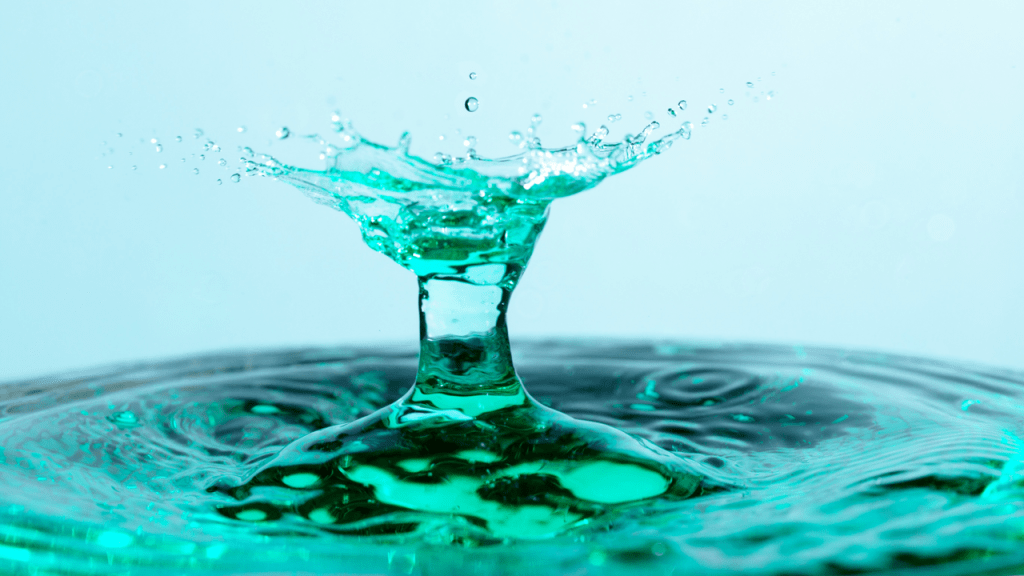
Photo by Miguel A Amutio on Unsplash.
This article was crafted with a touch of AI to bring fluid dynamics to life.




Leave a Reply