
Ever watched a boat cruising smoothly across the water only to wonder if there’s more happening beneath the surface than meets the eye? Sure, the wake ripples out gracefully and the boat hums along, but there’s a little-known mischief-maker lurking below, a trickster that can wreck propellers and turn calm waters into mayhem. It’s called cavitation, and it’s definitely not just your average bubble bath.
Cavitation is like a mischievous gremlin that shows up when conditions get just right… or rather wrong. Think of it as a surprise party thrown by bubbles, but these bubbles don’t pop with a soft pfft. Instead, they unleash enough power to damage metal. Sounds like chaos? Well, buckle up, because we’re diving into one of fluid dynamics’ most raucous phenomena.
I. The Birth of a Bubble Party
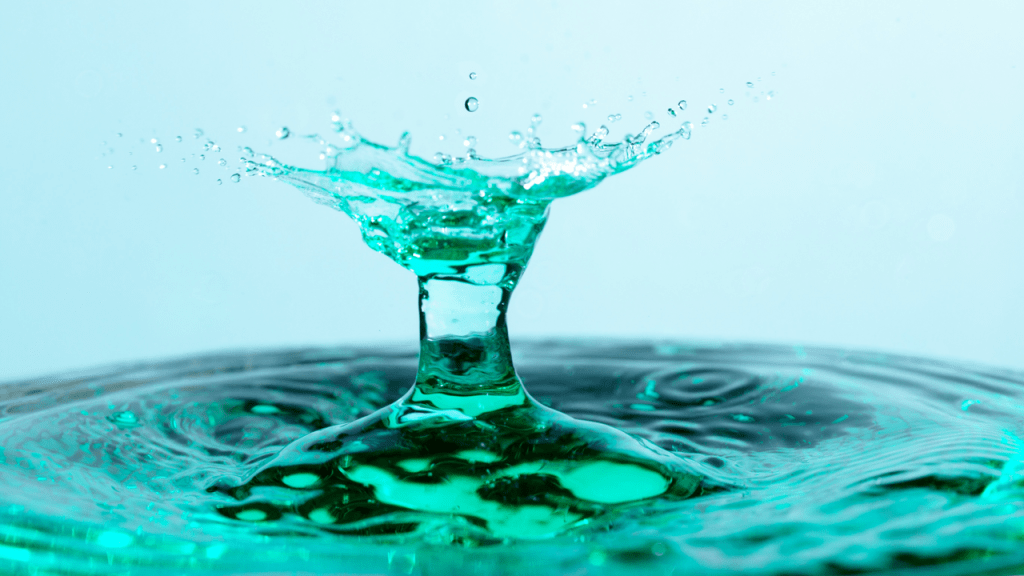
Cavitation begins with what seems like innocent fun: bubbles forming inside a liquid. But how do these playful bubbles come to life? It all starts with pressure. Under certain conditions, like when a propeller spins through water or liquid is squeezed through a narrow space, pressure can drop so much that the liquid starts to vaporize, forming tiny bubbles. Imagine a space so empty that even the liquid can’t hold itself together. That’s what happens in low-pressure zones: bubbles rush in to fill the void, ready to cause some havoc.
This bubbling mischief often starts around fast-moving objects, like a speeding boat’s propeller. Bernoulli’s Principle (our trusty guide to fluid dynamics) tells us that where the speed of a fluid increases, pressure decreases. It’s like when the music cranks up at a party, and suddenly, everyone’s dancing. But in this case, the dance floor is crowded with bubbles, all set to make their mark.
II. When Bubbles Go Rogue
At first glance, bubbles seem harmless, but like any good party, things can spiral out of control fast. These bubbles, frolicking in low-pressure zones, are just looking for a good time. But when they encounter regions of higher pressure, just downstream of where they were formed, the fun ends abruptly. The sudden increase in pressure causes the bubbles to collapse violently. And this collapse doesn’t just pop the bubble; it releases energy by unleashing powerful microjets and shock waves that are anything but gentle.
Imagine a bubble bursting with such force that it leaves craters in metal. It’s like that party guest who pops a balloon… and that balloon takes down the whole room! When these rogue bubbles collapse, they send shock waves powerful enough to erode propellers, damage boat hulls, and even create eerie noises. Who knew a bubble could be such a destructive party crasher?
And cavitation isn’t confined to the high seas. This sneaky phenomenon also creeps into industrial pumps and power stations, turning up where you least expect it. Whether you’re on a boat or near humming machinery, cavitation might just be brewing mischief behind the scenes.
III. From Chaos to Control
Not all bubble-fueled mayhem ends in disaster. Engineers and scientists have found ways to tame this rambunctious force and even put it to work. Picture bubbles that clean jewelry or even perform surgery. Cavitation has evolved from a mischievous gremlin into a surprisingly useful tool.
In ultrasonic cleaning, cavitation bubbles do the heavy lifting. High-frequency sound waves create rapid pressure changes, causing cavitation that blasts dirt and grime from delicate surfaces like jewelry or electronic parts. It’s like bubbles doing a high-energy dance, cleaning up the mess.
And if that weren’t impressive enough, medical researchers are using cavitation in non-invasive surgeries. Focused ultrasound harnesses the collapse of these bubbles to break down tissue without cutting into the body. Once the ultimate prankster, cavitation now plays the role of a precision surgeon.
Nature, too, has its own cavitation superstar: the pistol shrimp. This little critter snaps its claw with such speed that it creates a cavitation bubble, which collapses with a shock wave strong enough to stun or even kill prey. It’s like the shrimp is wielding its own miniature sonic weapon, turning bubbles into dynamite!
Conclusion: Taming the Mischief
Cavitation may begin as a chaotic bubble frenzy, but we’ve learned how to tame this wild force and turn it into something productive. From cleaning delicate electronics to performing surgery without a scalpel, cavitation shows us that even the most unruly forces can be mastered. So, the next time you’re popping a champagne cork or listening to a boat engine hum, remember: those bubbles may be hiding more mischief than they seem.
But no need to worry. We’ve got the know-how to harness these bubbles and make them work for us. Cavitation, once the trickster of fluid dynamics, is now the ultimate party trick, just with a little more science and a lot less destruction.
💧 Flow Check 💧
Bubbles can be troublemakers, but they don’t just appear out of nowhere. Here’s how they stir up chaos:
- Bernoulli’s Principle: Faster-moving fluids create lower pressure, giving bubbles a chance to form.
- Pressure Drop: When the pressure drops too low, liquids turn into vapor, creating those pesky cavitation bubbles.
- Shock Waves: When bubbles collapse, they release powerful shock waves that can damage surfaces like metal propellers.
🌊 Rogue Wave 🌊
Ready to dive into bubble mischief? Here’s your next challenge:
- Spot a “bubble party” in action! Whether it’s boiling water, soda fizz, or your next bath; can you catch bubbles forming and collapsing in your daily life?
- Imagine if cavitation could strike in your kitchen, what would those bubbles destroy? Could they pop a loaf of bread mid-rise or blow up your favorite mug?
- How might you tame a bubble for good? Dream up your own cavitation-powered invention… maybe a self-cleaning fridge or a bubble-powered espresso machine?
- And just for fun: if bubbles ruled the ocean, how do you think marine life would adapt?
Dive Deeper
Social Currents:
- James Urton (2024, September 10). Thanks to humans, Salish Sea waters are too noisy for resident orcas to hunt successfully. Phys.org
- Johnny von Einem (2024, July 24). Research shows the ocean is becoming too loud for oysters. Phys.org
- Jim Robbins (2019, January 19). Oceans Are Getting Louder, Posing Potential Threats to Marine Life. The New York Times.
- Travis M. Andrews (2017, April 13). Shine on you crazy crustacean: This shrimp kills with sound and is named after Pink Floyd. The Washington Post.
- Joanna Klein (2016, March 17). Water is the Real Force Behind Breaking a Bottle With Your Bare Hands. The New York Times.
Fluid Dynamics:
- Practical Engineering (2018, June 26). What is Cavitation?
- IET Institute for Energy Technology (2016, February 15). Cavitation – Easily explained!
- Physics Girl (2020, August 13). Fact-Checking this Viral Bottle Trick
- Physics Girl (2017, July 27). Mantis Shrimp Punch at 40,000 fps! – Cavitation Physics
- Newton (2012, August 17). Cavitation for beginners: building the fastest ship in the world – video. The Guardian
Photo by Sarah Lee on Unsplash.
This article was crafted with a touch of AI to bring fluid dynamics to life.

 Rogue Currents
Leave a comment