
Water’s usually the quiet type, flowing gently along rivers and streams, maybe bubbling softly in a fountain, or gliding smoothly out of your faucet. But every now and then, it has its diva moment: a full-on transformation where it flips from calm and graceful to chaotic and frothy. This dramatic change is known as a hydraulic jump, nature’s own plot twist where water throws out the rulebook and goes rogue. It’s not just a random outburst of splashiness; it’s fluid physics showing off its rebellious streak. Let’s dive in and uncover where these watery dramas unfold, and how they keep everything from rivers to dams in check.
I. The Calm Before the Jump
Water, when it’s on its best behavior, flows like a model citizen. In this state, known as laminar flow, water moves in smooth, organized layers, like a line of people patiently waiting their turn, slipping by without a fuss. This serene scene continues, water gliding like silk, until out of nowhere, it decides to mix things up… a hydraulic jump.
The drama starts when fast-moving water, called supercritical flow (think of it like a speedy cyclist zooming ahead of the pack), crashes into a slower patch of water: subcritical flow (more like casual walkers stopping to tie their shoelaces). Suddenly, the fast water can’t take the calm pace anymore, so it piles up on itself, leaps upward, and explodes into a bubbling, frothy mess. This is the hydraulic jump, water’s way of saying: “Time to make a splash!”
II. The Physics Behind the Diva Moment
So what’s really going on when water pulls off this dramatic move? Imagine it’s speeding along with loads of energy, like a runner at full sprint, feet pounding the pavement. But then it hits a slow-moving zone where it’s forced to stop and catch its breath. That energy has to go somewhere, and it does, by leaping up and spreading out in a chaotic swirl. The result? Water’s smooth flow gets replaced with foamy, turbulent waves, the air filled with the sound of rushing water.
Here’s the science: when fast water hits slower water, it loses its speed (or kinetic energy) and gains height (or potential energy). But it can’t do this without some turbulence: think splashes, bubbles, and droplets flying everywhere, like a wild rainstorm contained in a small space. It’s as if the water is having a mini-meltdown, venting its frustration by creating a watery explosion. That extra energy also gets lost as heat, leaving the water cooler, calmer, and ready to return to its steady flow.
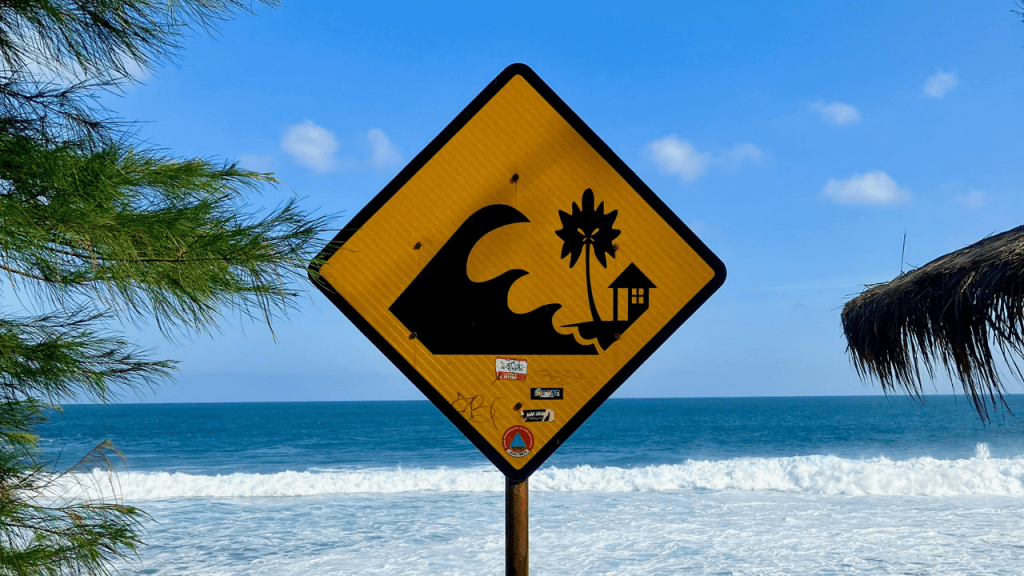
This process is different from the waves you might see crashing on the shore. While both involve water piling up and creating turbulence, breaking waves on the beach are caused by the wave’s interaction with the ocean floor as it enters shallow water. The wave slows down at the bottom but keeps moving fast at the top, which makes it topple over and crash, a bit like tripping at the finish line. Rogue waves in the deep ocean, on the other hand, are unpredictable giants formed by waves merging together. They may look chaotic, but they’re not related to hydraulic jumps, which happen when fast-moving water meets slower water in a confined space like a river or spillway. Hydraulic jumps are nature’s way of balancing energy in one place, while rogue waves are the ocean’s big, spontaneous surprise parties.
III. Where the Hydraulic Jumps Play Out
Think you haven’t seen a hydraulic jump before? Think again! They’re hiding in plain sight, even in your own home. Ever notice how water flows smoothly from your kitchen tap but then flares up in a splashy mess when it hits the sink? That’s a mini hydraulic jump in action. You can hear it in the sudden splatter, feel the cool mist, and see the water burst into chaotic spray. The same thing happens in showers, dishwashers, and even toilets (yes, even there).
But hydraulic jumps aren’t just doing their thing in kitchens and bathrooms. They’re the stars of the show in rivers too. The next time you’re out by a river, watch the rapids, they’re the natural version of this liquid drama. Water speeds up, hits a calmer section, and BOOM: foamy, frothy rapids form. At the base of waterfalls, you can see this too: water plunges down, crashes into slower flow, and the whole scene erupts into white-water chaos.
In engineered structures, hydraulic jumps play a critical role in keeping things safe. Dams, like the mighty Hoover Dam, rely on these jumps to control water’s speed. Without them, water would come rushing out of spillways too fast, potentially damaging the dam’s foundations. Instead, the hydraulic jump tames that energy, allowing the water to slow down and spread out before it reaches the bottom.
Conclusion: Water’s Rebel Story
Hydraulic jumps are nature’s reminder that even water has a rebellious side. Normally calm and controlled, water doesn’t always stick to the rules. When it’s had enough, it leaps, splashes, and foams, transforming from serene to chaotic in the blink of an eye. Whether it’s taming the flow of water in dams or creating epic rapids in rivers, hydraulic jumps are more than just a spectacle; they’re essential for keeping water’s energy in check.
So, the next time you’re washing dishes or standing by a river, look closer. You might just catch water in the act of going rogue, because sometimes, the real drama is in the flow.
💧 Flow Check 💧
Hydraulic jumps are water’s dramatic flip from calm to chaotic. Let’s recap:
- Laminar Flow: Water moving in smooth, orderly layers, like a calm stream.
- Supercritical Flow: Fast-moving water, brimming with kinetic energy.
- Turbulence: The chaotic, frothy aftermath when fast water meets slower water.
- Hydraulic Jump: Water’s rebel moment, converting speed into height, splashes, and bubbles, dissipating energy as heat.
🌊 Rogue Wave 🌊
Ready to embrace water’s rebellious side? Dive into these challenges:
- Could you spot a mini hydraulic jump in your own home? Maybe in the sink, the shower, or… somewhere unexpected?
- If you could harness the energy of a hydraulic jump, what would you power with it?
- How would you capture the moment when water “goes rogue” in art; would it be in a painting, a sculpture, or maybe even music?
- Here’s a thought: What if the water’s chaotic leap was telling a deeper story about breaking free from boundaries?
Dive Deeper
Social Currents:
- John Yoon (2024, September 28). Water Around Tennessee Dam Receding After Heavy Rain From Helene. The New York Times.
- Mitch Smith (2024, June 25). How the Midwest Floods Nearly Took Out a Century-Old Dam. The New York Times.
- John Briley (2022, October 7). In Idaho, R & R means rapids and relaxation. The Washington Post.
Fluid Dynamics:
- Practical Engineering (2019, January 29). What is a Hydraulic Jump?
- JBA Trust (2020, January 17). Hydraulic flume showing how engineered structures affect flow in rivers
- Francis Villatoro (2010, February 25). Hydraulic jump, low head dam installation, and coarse sediment transport
Photo by Dan Meyers on Unsplash.
This article was crafted with a touch of AI to bring fluid dynamics to life.


 Rogue Currents
Leave a comment