
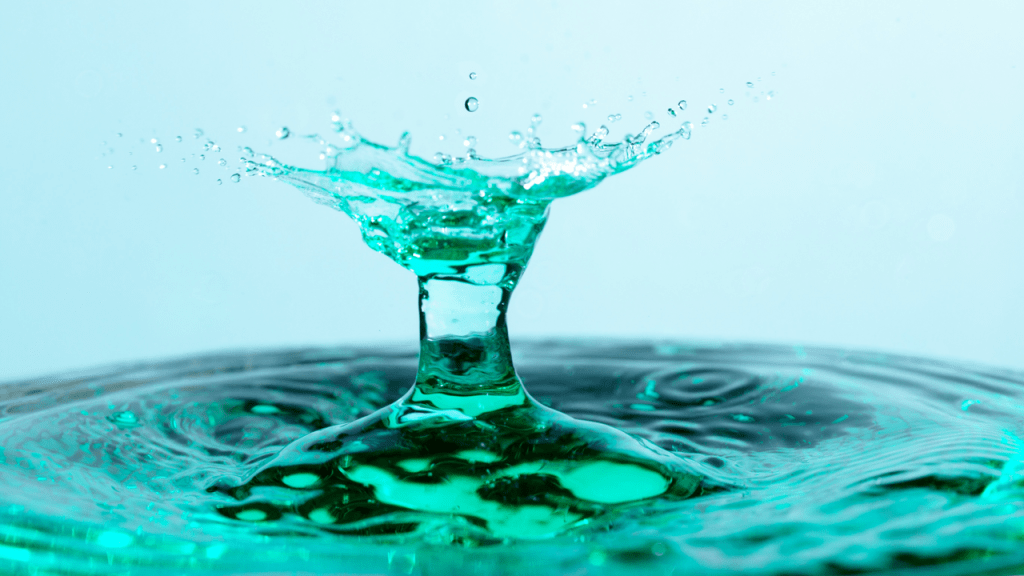
Step right up, folks! Get your magnifying glasses ready because today we’re diving into the most thrilling, pint-sized sporting event you’ve never seen: the Marine Micro-Olympics! Picture this: in a single droplet of seawater, a bustling metropolis of plankton is gearing up for the race of their lives. What better way to celebrate International Microorganism Day than by cheering on the ocean’s tiniest champions as they compete in a race of epic, microscopic proportions? These aren’t your average athletes; they’re the tiniest champions of the ocean, battling against swirling microcurrents, nutrient-rich whirlpools, and the occasional lurking predator, all under the watchful eye of fluid dynamics.
In this droplet-turned-Olympic stadium, every twist of a cilium and every flick of a flagellum is a make-or-break moment. Fluid dynamics isn’t just a background player here; it’s the rulebook, referee, and crowd all rolled into one. So, who will rise to the challenge and swim their way to gold? Let’s find out!
I. The Marine Droplet Arena: A Miniature Ocean Adventure
Close your eyes and imagine the entire ocean, with its crashing waves, endless depths, and mysterious creatures, all condensed into a single droplet of seawater. Now, shrink yourself down to the size of a microorganism and dive in! Welcome to the Marine Micro-Olympics arena, where fluid dynamics isn’t just in the background, it’s the force shaping every twist, turn, and flick of movement.
In this tiny droplet, the water behaves more like syrup than the easy-flowing liquid we’re familiar with. Every swimmer must contend with this resistance, where moving even an inch requires overcoming a sticky, viscous force. The planktonic athletes aren’t just battling each other, they’re wrestling with the droplet itself.
At this microscopic scale, Reynolds number reigns supreme. Here, it’s extraordinarily low, meaning that viscosity dominates over inertia. Picture it this way: instead of gliding through water like a dolphin, our tiny competitors are swimming through honey. The moment they stop moving, they stop entirely. Every motion is calculated to overcome drag, a force that resists their every move. This turns even a simple flick of a flagellum into a finely tuned balancing act of thrust versus resistance.
As if that weren’t enough, the droplet isn’t still, it’s a bustling ecosystem filled with swirling microcurrents, bobbing salt particles, and scattered nutrients. These currents can either hinder or help our competitors, adding a whole new layer of strategy. The challenge is clear: it’s not just about who’s the fastest, but who can read the flow of this dynamic environment and use it to their advantage.
II. Meet the Competitors: Planktonic Superstars with a Splash of Personality
The stadium hums with excitement as the planktonic athletes prepare for the race. Let’s dive in and meet the quirky contenders:
- The Spiraling Phytoplankton—Chlamydomonas: Picture this: a tiny green alga, twirling through the water like a ballerina on a mission. Chlamydomonas is the queen of phototaxis, meaning she’s got a laser focus on the light filtering through the droplet. With two whip-like flagella, she pulls off a synchronized breaststroke, propelling herself toward the finish line with grace and style. Don’t let her delicate moves fool you, she’s here to win, and the light is her guiding star.
- The Speedy Zooplankton—Copepod: If Chlamydomonas is the ballerina, then Copepod is the sprinter, zipping through the droplet with lightning speed. Think of him as the Noah Lyles of the micro-ocean, using his powerful appendages to dart through the water in quick, precise bursts. He’s a hunter too, with eyes sharp as a hawk, always on the lookout for a quick snack mid-race. Copepod isn’t just fast; he’s strategic, making split-second decisions to dodge debris and outmaneuver his rivals.
- The Filter-Feeding Champion—Daphnia: Meet Daphnia, the multitasker extraordinaire! Known as the “water flea”, Daphnia keeps her cool, filtering the water for nutrients with her feathery antennae as she swims. She’s like the marathon runner who snacks while she strides, always fueled and ready to go the distance. Her steady pace and unflappable nature make her a strong contender, proving that slow and steady can indeed win the race.
- The Shape-Shifting Amoeba—Chaos carolinense: And then there’s Chaos, the wild card of the race. This amoeba doesn’t swim in the traditional sense, she flows, oozing her way through the droplet by changing shape as she pleases. Imagine a blob of jelly with a mind of its own, squeezing through gaps and taking shortcuts that no one else can. Chaos is unpredictable, but that’s her strength. She might be the underdog, but her adaptability could just see her through to the podium.
These planktonic superstars have more than just speed; they’ve got personality, charm, and the evolutionary know-how to navigate the micro-ocean’s many challenges. But who will emerge victorious in this droplet of destiny?
III. Race Day: A Whirlwind of Fluid Dynamics and Planktonic Prowess
And they’re off! The race begins with a flurry of motion as Chlamydomonas spirals toward the light, her flagella whipping through the water in perfect harmony. The droplet’s disco-ball reflections glimmer around her, but she’s focused, using every ounce of phototactic precision to stay on course. It’s a dance, and she’s leading… but not for long.
Suddenly, a swirl of nutrient-rich microcurrents whips through the droplet, knocking Chlamydomonas slightly off course. She stumbles, but recovers with a quick spin, adjusting to the new flow patterns. Meanwhile, Copepod, always the opportunist, takes advantage of the chaos, darting through the disrupted water like a micro-missile, leaving tiny whirlpools in his wake.
Just when it seems like Copepod is poised to take the lead, an unexpected eddy spins him sideways, slowing his sprint. Enter Daphnia, cruising along with her smooth, filter-feeding motion. She’s playing the long game, letting the currents work for her as she sails through, gathering energy with every stroke.
But wait! A tiny grain of salt bobs into view, looming like an iceberg in the droplet. While Chlamydomonas and Daphnia artfully dodge around it, Chaos carolinense sees it as an opportunity, squeezing through a microscopic crack in the grain, bypassing the others with an unpredictable shortcut!
The competitors are neck and neck now, but the final surprise lies ahead. A sudden shift in light sends Chlamydomonas into overdrive, her phototaxis instinct kicking in as she races towards the glowing finish line. Copepod makes one last lightning-fast burst, but it’s not enough. Chaos tries to surge forward, taking advantage of yet another unorthodox route through a current swirl, while Daphnia holds steady, fueled and determined.
In a blur of motion, Chlamydomonas crosses the finish line first, her light-guided swim just edging out Copepod’s speed. The crowd of microscopic spectators goes wild, cheering for the competitors who gave it their all in the swirling, briny depths of the droplet.
Conclusion: The Champions of the Marine Micro-Olympics
The Marine Micro-Olympics may be a fantastical event, but the fluid dynamics that drive it are as real as the oceans themselves. Each planktonic competitor brought something unique to the race, from Chlamydomonas’s light-chasing spirals to Copepod’s lightning-fast dashes, Daphnia’s steady endurance, and Chaos carolinense’s shape-shifting prowess. These tiny athletes are masters of their micro-ocean, each navigating the swirling currents, sticky water, and nutrient-rich whirlpools with skill and flair.
In the end, it wasn’t just about speed or strength; it was about understanding the environment and making the most of it. That’s the true power of fluid dynamics, a force that shapes not just the world we see, but the invisible worlds within it.
So, the next time you glance at a droplet of seawater, remember that it holds a whole universe of life, where every move matters and the smallest currents decide the fate of its tiniest inhabitants.
💧 Flow Check 💧
Before you dive back into the vast ocean of life, here’s a quick splash of the key fluid dynamics concepts from our Marine Micro-Olympics:
- Reynolds Number: At microscopic scales, low Reynolds numbers mean that viscous forces dominate, making every movement through the fluid feel like swimming through syrup.
- Microfluidics: The study of fluid flow at tiny scales, where the physics of movement changes dramatically, impacting how our planktonic athletes navigate their micro-ocean environment.
- Drag and Thrust: These forces work in tandem; drag is the resistance encountered as plankton push through the water, while thrust is the propulsion they generate using flagella, cilia, or other means to overcome that resistance and move efficiently.
🌊 Rogue Wave 🌊
As you float away from our Micro-Olympics, consider these fluid dynamics challenges:
- What if you were a plankton in a droplet; how would you use fluid dynamics to your advantage in a race?
- Imagine trying to swim through syrup; how would the principles of drag and thrust play a role in your strategy?
- How do you think the tiny racers in our story would fare in different fluid environments, like freshwater or oil?
These questions aren’t just for fun, they’re a reminder of how fluid dynamics shapes the world in ways we can’t always see, but that are crucial for life at every scale.
Dive Deeper
Social Currents:
- (2024, September 17). Welcome to the International Microorganism Day Website!
- Michael Marshall (2024, August 22). The Earth’s deepest living organisms may hold clues to alien life on Mars. BBC.
- Porter Fox (2024, July 29). There’s a New Reason to Save Life in the Deep Ocean. The New York Times.
- Ferris Jabr (2024, August 20). Strange and wondrous creatures: plankton and the origins of life on Earth. The Guardian.
- Maura Judkis (2016, November 4). An ocean-obsessed Spanish chef brings plankton to the plate — and makes it glow. The Washington Post.
Fluid Dynamics:
- Asianometry (2022, September 4). Microfluidics and the Elusive Lab-on-a-Chip
- SmarterEveryDay (2022, August 27). TRACTOR PULLS: It’s Not What You Think
Photo by charlybron on Unsplash.
This article was crafted with a touch of AI to bring fluid dynamics to life.

 Rogue Currents
Leave a comment