
Picture the iconic Olympic flame, a symbol of unity and perseverance, glowing in the Parisian night sky. But there’s a surprising twist: this flame isn’t burning at all. Instead, it’s an innovative illusion created from light and mist, a sustainable marvel that captures the spirit of modern innovation. Welcome to Paris 2024, where tradition meets cutting-edge technology, and the artistry of water and light takes center stage.
As the Paralympics began just four days ago, the Paralympic cauldron was relit by a group of five athletes, reigniting the flame that had waited patiently since the end of the Olympic Games. This continuity between the two events preserves tradition while emphasizing a commitment to innovation and inclusivity.
This year, the cauldron doesn’t just honor ancient rituals; it makes a bold statement about the future. Paris 2024 has reimagined the flame, replacing fossil fuels with a sophisticated blend of water, light, and air. This follows the path set by the Tokyo 2020 Olympics, where the cauldron was the first to burn hydrogen as a fuel, with the hydrogen produced via the electrolysis of water using solar power—a process known as green hydrogen. Both Tokyo and Paris showcase how the Games are embracing sustainable innovations to reduce their environmental impact.
Behind this captivating display lies a fascinating interplay of natural forces and human ingenuity, transforming one of the world’s most recognized symbols.
I. From Fire to Mist—The Science Behind the Illusion
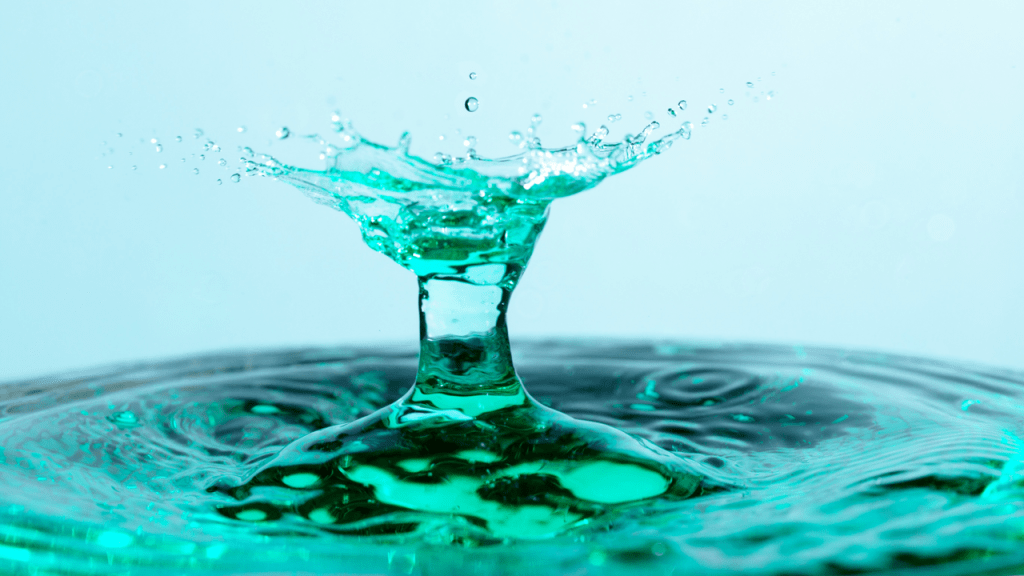
The magic begins with atomization—the process of breaking a liquid into fine droplets. Although it might sound complex, atomization is something we encounter daily, like when a spray can disperses a fine mist to cover a surface evenly. For the Paris 2024 cauldron, this familiar concept was taken to an extraordinary level by using high-pressure nozzles to force water through tiny openings. As the water is expelled at high speed, it breaks apart into millions of fine droplets, creating a delicate mist that forms the foundation of the cauldron’s visual display.
The real challenge lies in the precise control of this atomization process. The 200 high-pressure nozzles must produce uniformly small droplets to create a smooth, consistent mist, crucial for the illusion of a flickering flame. Any variation in droplet size could disrupt the effect, so the nozzles are carefully calibrated to maintain this uniformity. This meticulous control transformed a simple principle into a display truly worthy of the Olympic stage.
II. Light as Fluid—The Dance of Photons in the Paris Sky
Once the mist is created, the real magic happens when light from 40 LED spotlights, with a combined output of 4 million lumens, interacts with those tiny droplets. Here, Mie scattering comes into play, where light disperses in all directions, creating the warm, flickering glow that mimics a real flame.
To visualize this, imagine driving through fog: your car’s headlights don’t just cut through the mist; they spread out, creating a diffuse glow that can obscure visibility. This scattering effect is also what gives clouds their bright white color, as millions of tiny water droplets scatter light in all directions. In the Paris cauldron, this effect is carefully controlled to produce a soft, even glow that imitates the warmth and movement of a true flame. The result is more than an illusion; it’s an artistic expression of light and matter interacting to create something entirely new.
III. Buoyancy and Balance—The Floating Cauldron and the Science of Lift
Now let’s talk about the cauldron’s ascent into the sky, tethered to a massive helium balloon. This isn’t just a visual treat; it’s a demonstration of balancing forces and understanding how elements interact. The balloon’s design is a nod to France’s historic contributions to balloon flight, such as the Montgolfier brothers’ first successful manned flight in the 18th century, marking a significant chapter in the history of aviation.
But here’s the challenge: the cauldron needed to rise smoothly and stay stable, even in the unpredictable Paris air currents. The helium-filled balloon had to be perfectly balanced to ensure the cauldron ascended gracefully and remained steady, showcasing the elegance of mastering these forces.
Conclusion: Let the Games—and Innovation—Continue
The Paris 2024 cauldron is more than just a symbol; it’s a vision for the future. By using natural forces to create a flame without fire, the organizers demonstrated that tradition and innovation can coexist. This cauldron is proof that understanding and harnessing these principles can lead to more sustainable, creative solutions in all aspects of life.
So the next time you see that brilliant “flame” rising into the Paris sky, remember: it’s not just an Olympic or Paralympic tradition; it’s a beacon of what’s possible when we blend science with creativity. The Paris 2024 cauldron has turned water and light into a powerful symbol of the future. And in doing so, it reminds us that progress isn’t just about preserving the past but about lighting the way forward with innovation and sustainable thinking.
💧 Flow Check 💧
Paris 2024 continues the Olympic tradition of innovation in sustainability, building on the green hydrogen cauldron of Tokyo 2020. Here’s how the magic happens:
- Atomization: High-pressure nozzles transform water into a fine mist, forming the foundation of the flame-like illusion.
- Mie Scattering: Light interacts with the mist, scattering in all directions to produce the warm, flickering glow of a true flame.
- Buoyancy and Balance: The cauldron ascends smoothly into the Paris sky, perfectly balanced by a helium balloon, masterfully managing both lift and stability.
🌊 Rogue Wave 🌊
Next time you feel the cool spray of a fountain or watch sunlight dance through a morning mist, consider the fluid dynamics at work:
- Can you spot the atomization that turns water into a delicate mist?
- Do you notice how light scatters, creating that soft, glowing effect?
- Or perhaps you observe the balance of forces, where even the air carries a certain weight?
Remember, science isn’t just in the lab; it’s all around us. So, take a moment to see the invisible currents at play and imagine the possibilities when nature meets innovation.
Dive Deeper
Social Currents:
- Andrew Keh (2024, July 29). The Olympic Flame Isn’t a Flame at All. The New York Times.
- Kaity Kline (2024, July 30). The Olympic flame isn’t actually fire. So what is it?. NPR.
- EDF (2024, July 26). With the flame ring, the Cauldron of Paris 2024 makes history.
Fluid Dynamics:
- SmarterEveryDay (2022, October 30). Everything About Irrigation Pivots
- Michel van Biezen (2015, May 27). What is a Photon? 13. Mie Scattering
- Veritasium (2023, August 31). Should Airships Make A Comeback?
- Brut (2024, July 27). L’énergie d’Alain Bernard : les secrets de la conception de la flamme de la vasque Olympique
Photo by Aaron Burden on Unsplash.
This article was crafted with a touch of AI to bring fluid dynamics to life.

 Rogue Currents
Leave a comment